The 2026 Science Festival, organised by the CNRS, is coming to Le Fresnoy
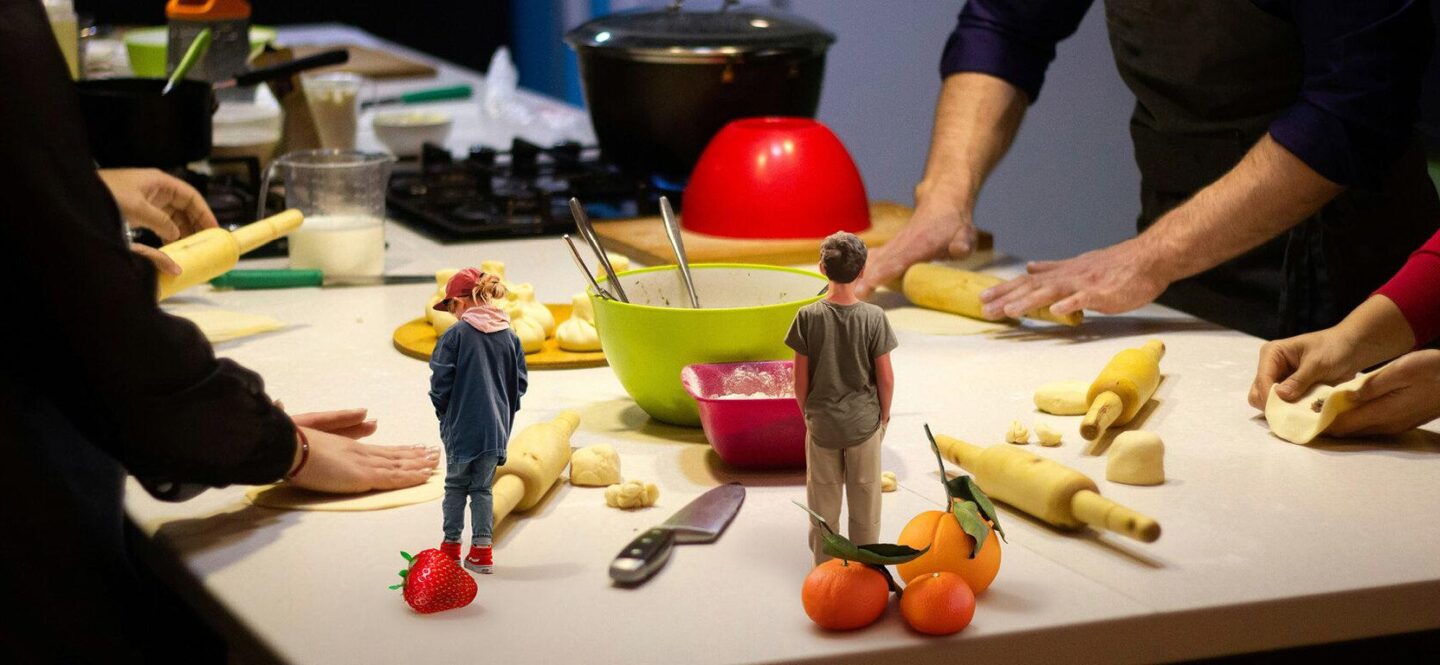
8–10 OCTOBER 2026 The CNRS Festival invites you to Le Fresnoy – National Studio to discover the wonders of scientific research at the heart of the ‘Panorama 28’ exhibition. As part of the Fête de la Science, this special edition celebrates the national theme ‘Saveurs savantes’ and immerses you in captivating scientific worlds. On the programme: three days of fun and interactive workshops led by scientists, aimed at school groups and the general public. A unique opportunity to explore, learn and share a passion for research.
What’s on
Interactive workshops: Designed by researchers, these workshops offer the chance to explore topics linked to the 2026 national theme, ‘Saveurs savantes’, covering a range of subjects including health, chemistry, history and atmospheric sciences. A unique opportunity to engage in dialogue and forge links between science and society.
Live demonstrations: Come and see some fascinating demonstrations that show, in a practical way, how science enriches our daily lives.
Where art and science meet: For three days, the CNRS Festival runs alongside the Panorama exhibition. A major annual event at Le Fresnoy, Panorama offers visitors the chance to discover more than 50 previously unseen works, films, installations and performances in the fields of visual arts, sound and digital creation, produced by artists from Le Fresnoy. On Saturday 10 October, two hybrid workshops, led by artists Pierre Pauze and Nazif Can Akçali, will form part of this immersive experience at the intersection of the arts and sciences.
7 fun and educational workshops led by passionate scientists
> The food chain of the perfect crime
The Centre for Judicial History invites you to explore a rather unusual food chain: the menu begins with the ingestion of poison, a highly effective way of making someone disappear without anyone noticing…The history of justice is rife with cases of poisoning, often described as ‘women’s crimes’, committed by female criminals known as ‘the poisoners’. But is crime a matter of gender? Man, woman… or bacteria? To ensure everyone gets their share of the cake and the crime is perfect, you’ll also need to round off this workshop by considering the meal… of scavenging insects! This workshop is organised by the Centre for the History of Justice.
> Who Put Physics in My Soup?
What if the kitchen were, in fact, one of the most astonishing everyday physics laboratories – a place where matter transforms before our very eyes, guided by invisible laws that we use without always understanding them? The teams at the Institute of Electronics, Microelectronics and Nanotechnology invite you to an immersive workshop that opens the doors to a fascinating world where saucepans become reactors, where microwaves set molecules in motion, and where every texture and every aroma every flavour obeys the fundamental principles of physics. With their air of slightly offbeat chefs, straddling the line between scientific laboratory and culinary brigade, these scientists will reveal the hidden mechanisms that shape what ends up on our plates and show that cooking is not merely an art. It is a living, vibrant science… and a delightfully spectacular one at that. This workshop is organised by the Institute of Electronics, Microelectronics and Nanotechnology.
> Taste: is it down to genetics or molecules?
Why don’t we all perceive tastes in the same way? For example, some people associate coriander with a soapy taste! Is this due to a genetic mutation in these people? Are there molecules that give food its flavour? By comparing your own experiences, you’ll realise that your sense of taste also depends on biology. Through a fun exploration of scientific laboratory techniques, the scientists at METAB-OMICS will aim to provide the most delicious scientific answers. This workshop is organised by the Multi-omics and Pathophysiology of Metabolic Diseases unit.
> Food for our lungs!
Science can be eaten… and measured. In this workshop run by scientists from PC2A, discover the invisible impact of your cookers! Come and watch – and perhaps even taste – a demonstration of waffles, crêpes and other delicacies being cooked, whilst observing pollutant emissions into the air in real time. Using ultra-precise sensors, join PC2A scientists in analysing the gases and particles released depending on the cooking method, the energy source used or the efficiency of the ventilation. This workshop is organised by the Physical Chemistry of Combustion Processes and the Atmosphere unit.
> Dining with Francis I! Banquet delights at the Camp du Drap d’Or
In June 1520, Francis I and Henry VIII met south of Calais to celebrate the peace between France and England. For this historic event, sumptuous palaces of gold cloth and glass were erected on the border between the two kingdoms within the encampments of the royal courts. What better way to seal this alliance than with lavish banquets? But what was a royal banquet like in the 16th century? What could one enjoy there? And what did these ‘Camp du drap d’or’ palaces look like? This workshop is organised by the Federation for Research into Visual Sciences and Cultures.
> Nano-sponges: materials that soak things up – with superpowers!
What if chemistry could reveal the subtle flavours of matter? MOFs are materials designed as frameworks full of holes, but on an infinitely small scale. These nano-sponges can capture certain molecules present in the air or water, retaining only the most subtle aromas. During this interactive workshop, discover how these structures are built, observe how they trap molecules, and create your own nano-sponge for a taste of science in action. This workshop is organised by the Catalysis and Solid-State Chemistry Unit.
> The worm that cooked the sun
Discover the paradox of a marine worm which, as an adult, no longer has a functioning digestive system and no longer ‘eats’ in the conventional sense of the word. Through photosymbiosis, it hosts microalgae (Tetraselmis convolutae) within its own tissues. These algae then convert light energy into nutrients that can be used directly by the worm. Scientists from the UGSF and PLBS will present this natural phenomenon as an extreme form of a ‘short supply chain’ for nutrition: the worm no longer seeks out its food; it cultivates it within itself. What is the difference between eating to live and harbouring life to feed oneself? This workshop is organised by the Structural and Functional Glycobiology Unit and the Lille Platforms for Biology and Health.
Two workshops led by the artists Pierre Pauze and Nazif Can Akçali will be taking place on Saturday 10 October.
> The Kitchen of Anomalies: Molecular Recipes and Digital Heroes
Experience an immersive journey at the intersection of organic chemistry and the emerging digital culture. Discover how the invisible structure of an ingredient can become the foundation for a new collective imagination, thanks to artificial intelligence and collaboration between researchers and artists. This workshop is organised by the Structural and Functional Glycobiology Unit, the Lille Platforms for Biology and Health, and Pierre Pauze.
> On biohacking, longevity and gastrophysics
Immerse yourself in a creative workshop centred on making and tasting experimental edible jellies. Using natural ingredients, plants, food colourings and nutritional supplements inspired by biohacking and longevity, create unique compositions by experimenting with flavours, colours and textures. The workshop will continue with an immersive tasting session: around the ‘Longévitable’ installation, explore different tasting conditions to discover how the environment influences our perception of taste and our relationship with food. This workshop is led by Nazif Can Akçali, artist-in-residence at Le Fresnoy. Workshop by registration: http://l-f.fr/rWno
The 2026 CNRS Festival is organised by the CNRS and Le Fresnoy – National Studio for Contemporary Arts / A festival co-funded by the Hauts-de-France Prefecture and the Hauts-de-France Region / An event coordinated by Ombelliscience.
Practical information
Free admission / Suitable for all audiences
📍 Le Fresnoy – National Studio for Contemporary Arts 22 rue du Fresnoy, 59200 Tourcoing Metro Line 2, Alsace
WED 25 NOV 2026— 4.00pm A talk organised in partnership with CEAC/University of Lille as part of the educational programme, open to the public. Matthieu Raffard has been working as part of an artist duo with Mathilde Roussel since 2017.
WED 18 NOV 2026— 4.00pm A lecture organised as part of the educational programme, open to the public. Cy Lecerf Maulpoix is an author, translator and lecturer in critical theory at the city’s School of Fine Arts (INSEAMM).
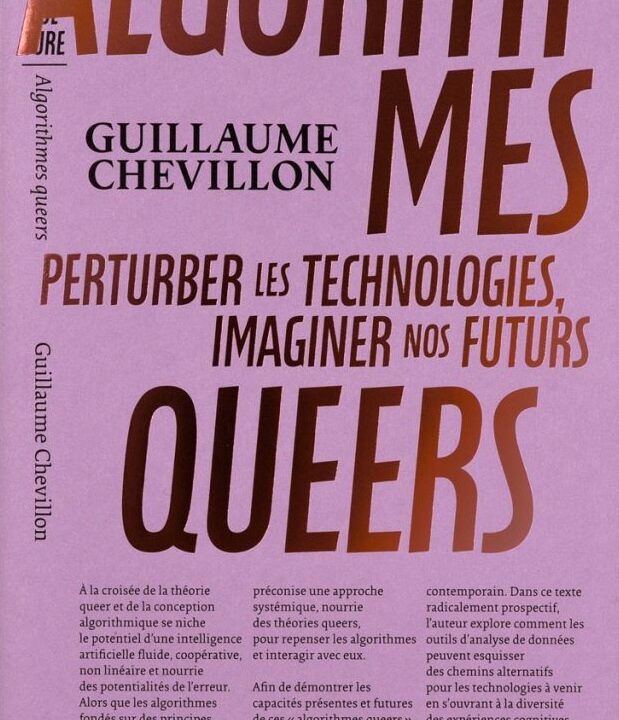
WED 4 NOV 2026— 4.00pm Lecture organised as part of the teaching programme, open to the public. Guillaume Chevillon is a professor at ESSEC, where he holds the Chair in Cultural Industries, Art and Creative Technologies and is Director of Metalab for AI, Data and Society, a transdisciplinary research institute dedicated to the societal challenges of artificial intelligence.