Étienne Kawczak-Wirz
Eumull Moder Mor - Installation - 2026
presented as part of the exhibition Panorama 28 - Invisibles ?

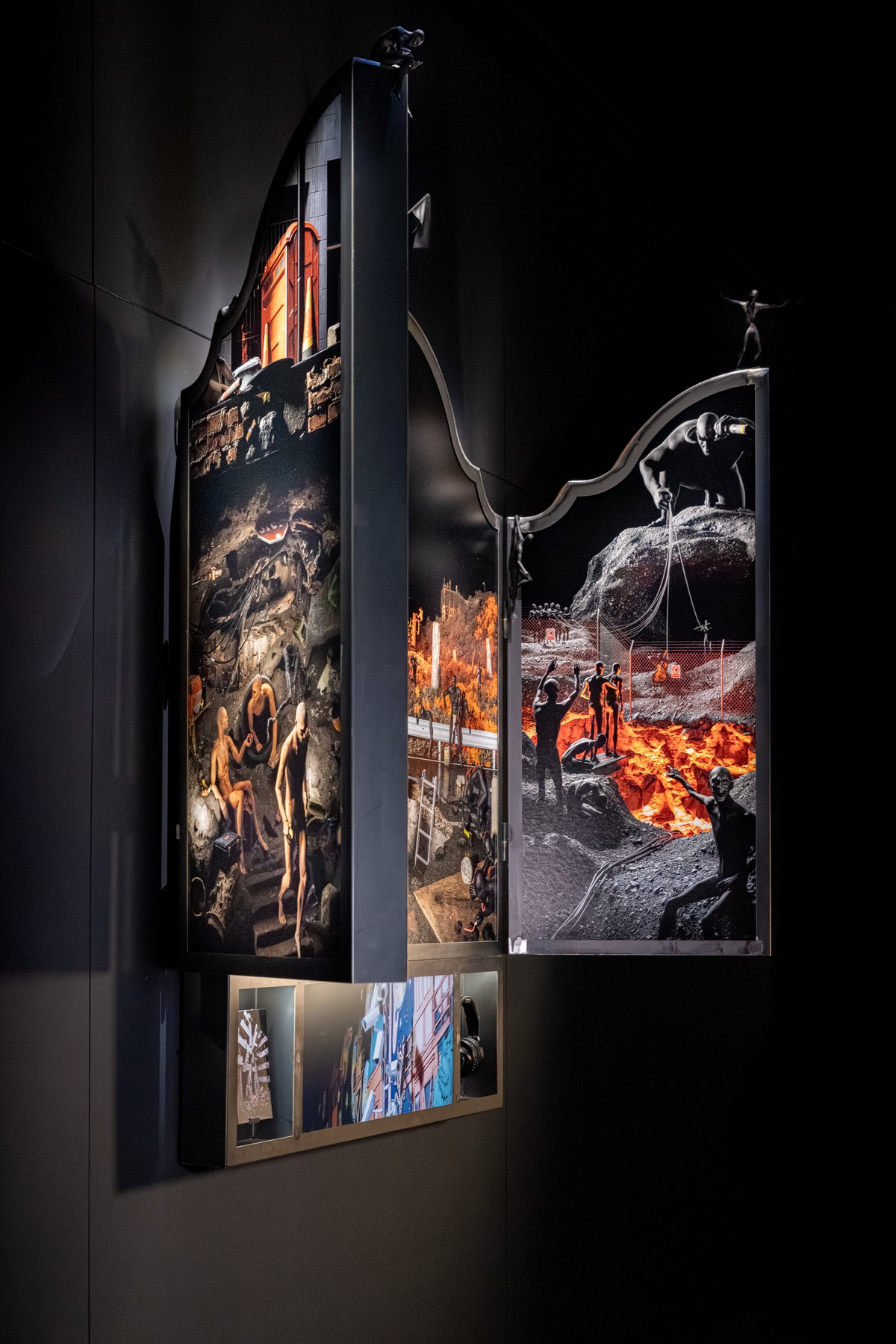
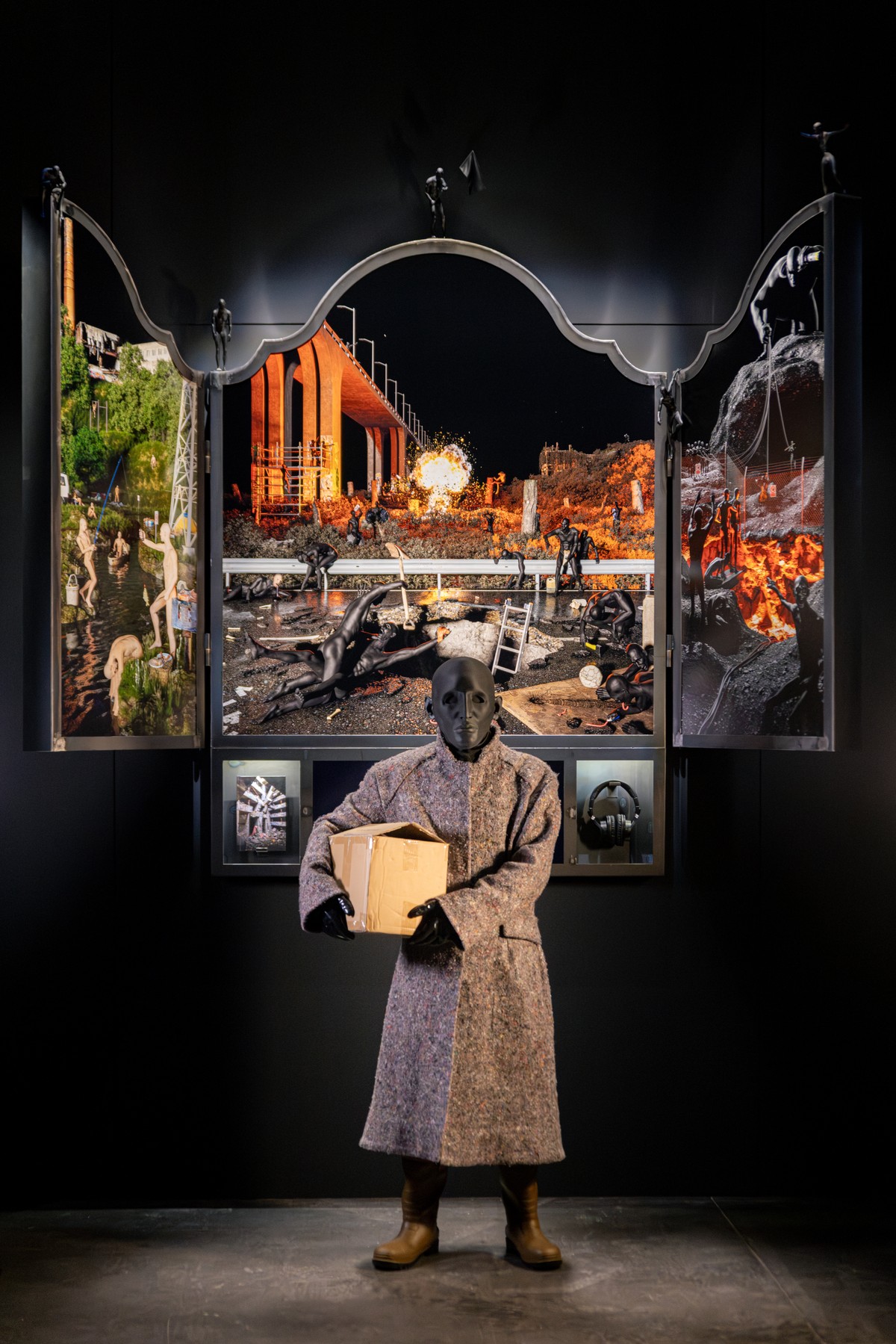
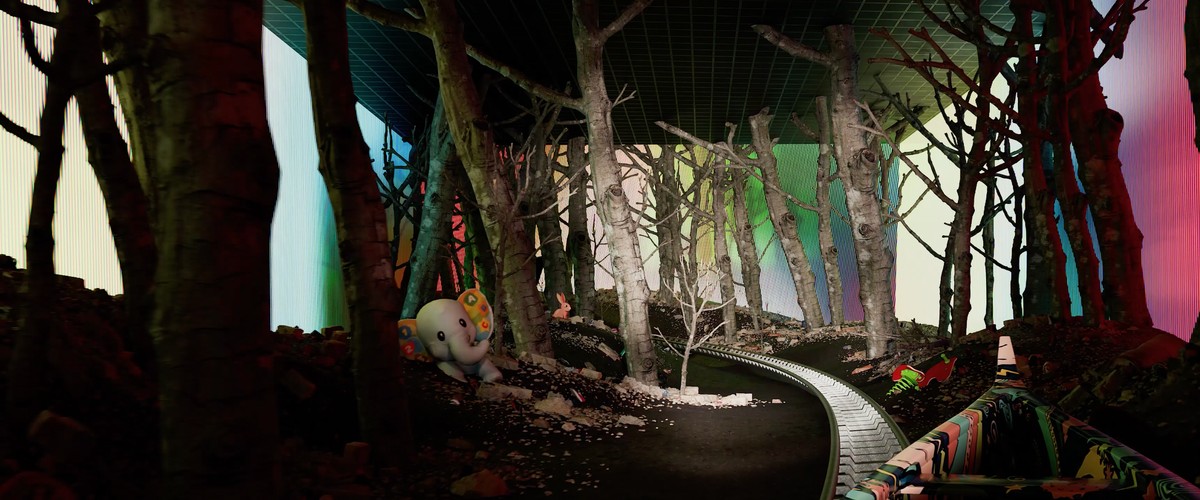
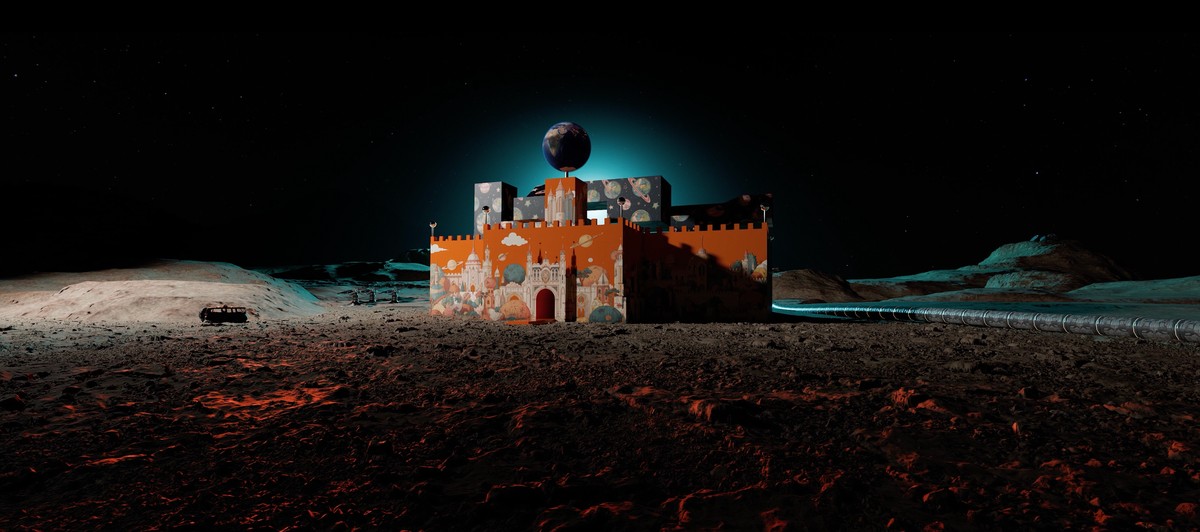
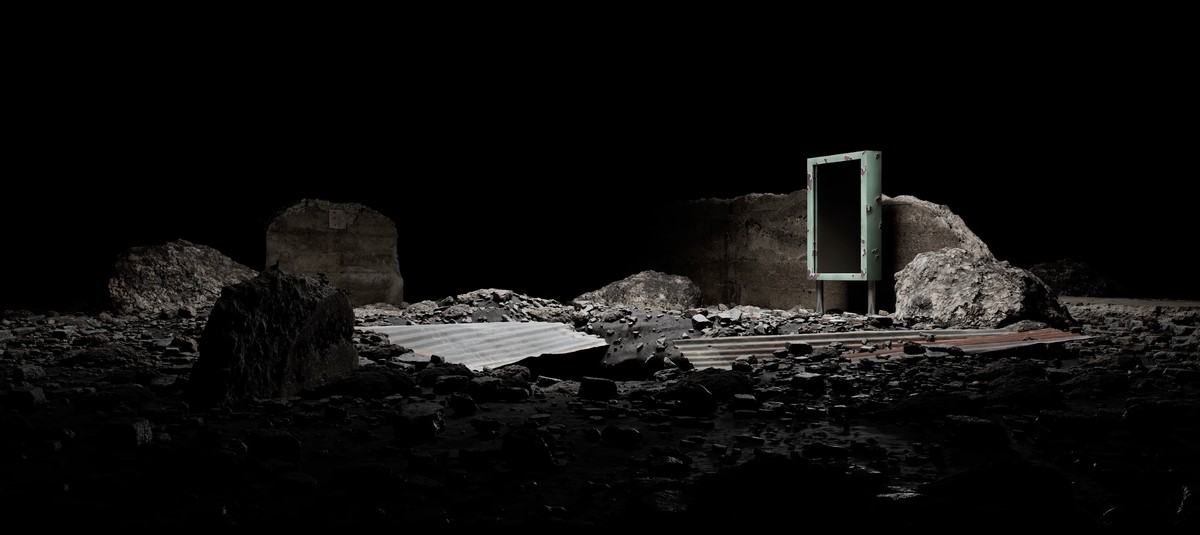
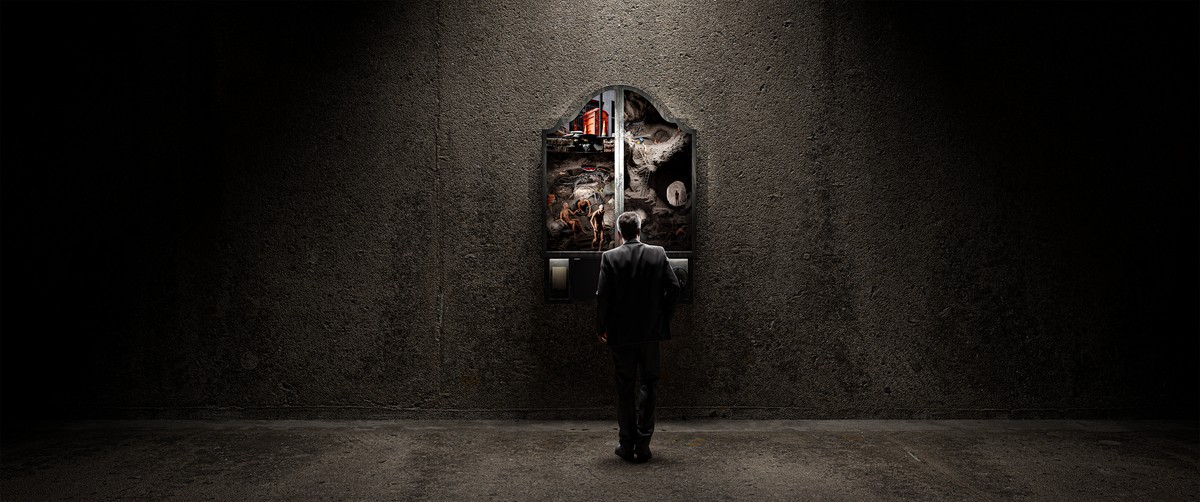
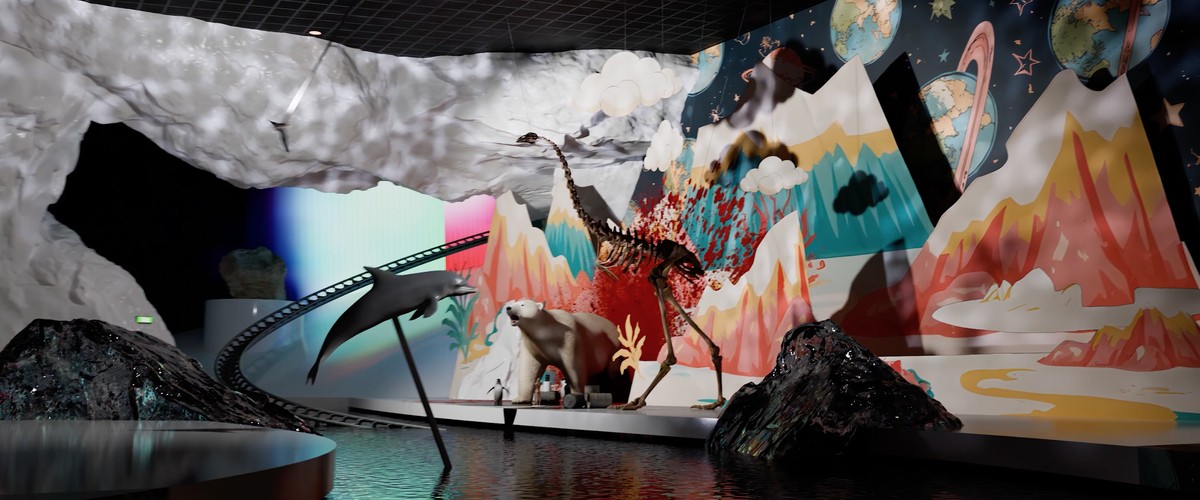
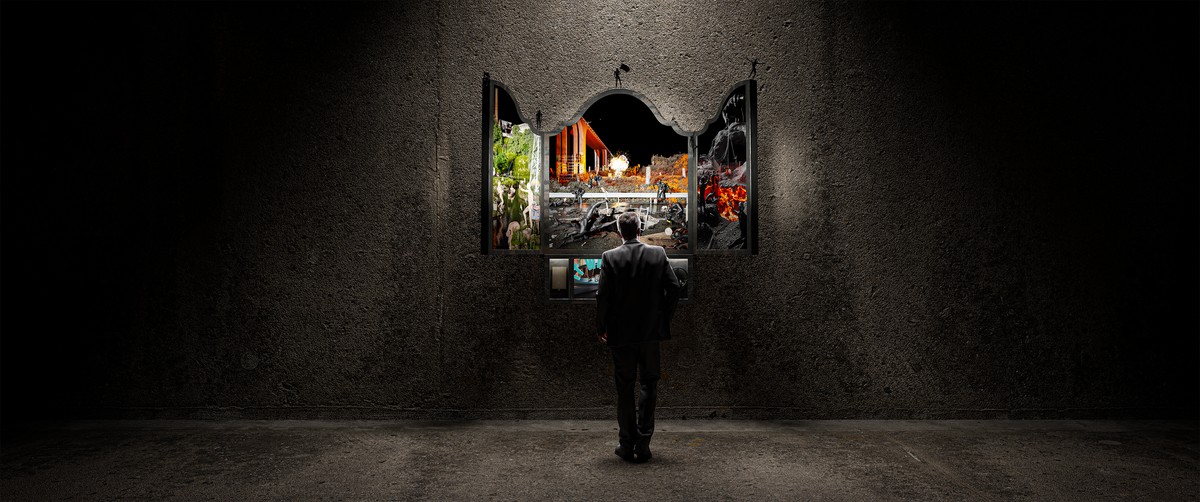
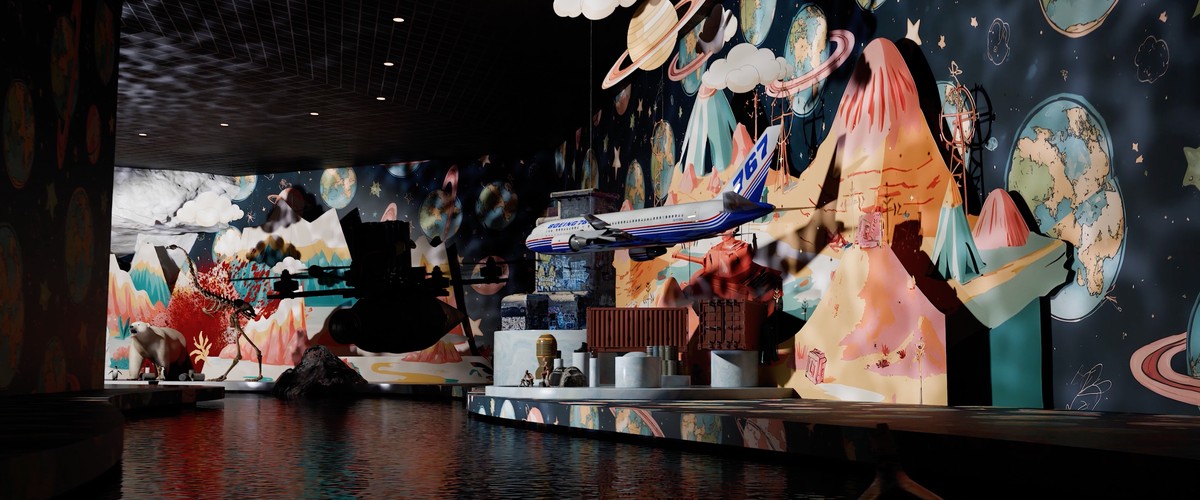
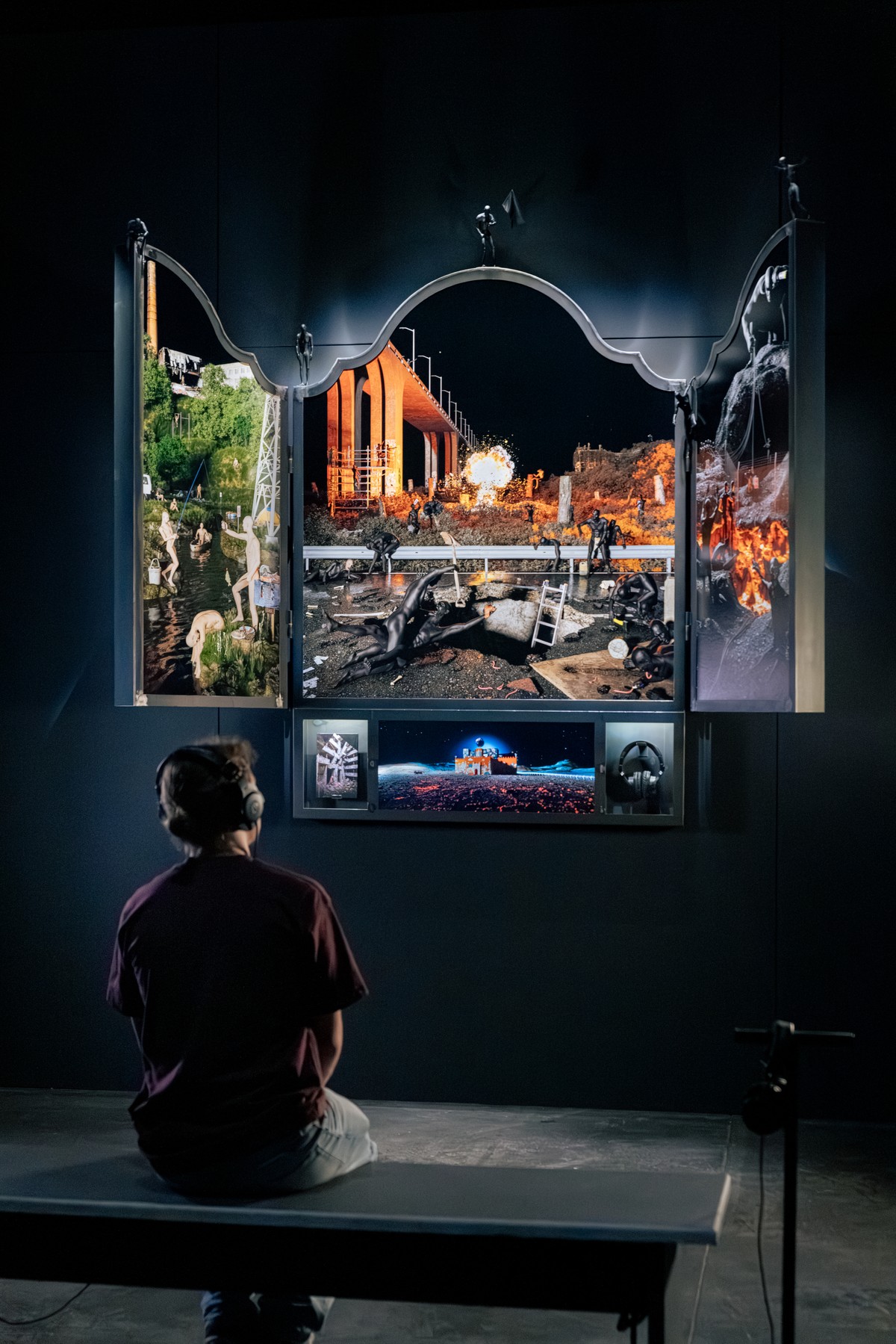


Eumull Moder Mor is a secular altarpiece, albeit one inspired by the religious polyptych. This traditional form, which interests me for its rigorous composition: it conveys the impression of a contained world, of a comprehensive and meditative vision.
This work began with nature, as is often the case with what I do; in this instance, with a lake where I would often go strolling around during my two years at Le Fresnoy. As I walked around this body of water, rich in biodiversity, I was able to observe, season after season, that basic reality, the natural cycle of regeneration. From observing the cycles of life I started to question their foundations: the soil, its composition, and its capacity for renewal. I was particularly interested in the litter beneath my feet: dry and colourful in November, it gradually grew discoloured, black, muddy, and covered in snow by February. It was in the vocabulary of pedology that I found the right words to name my work. Eumull [Mull], Moder, Mor: three terms denoting three stages of forest soil fertility. These structure the main triptych of the altarpiece as stages in a process of the world’s degradation.
What if this cycle, which we believe to be eternal, were to come to an abrupt end overnight?
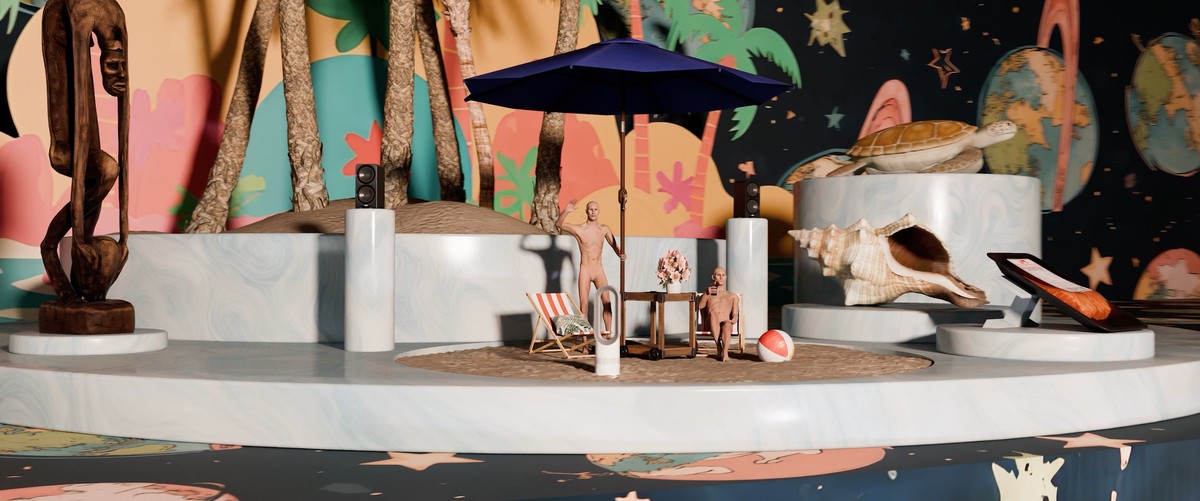
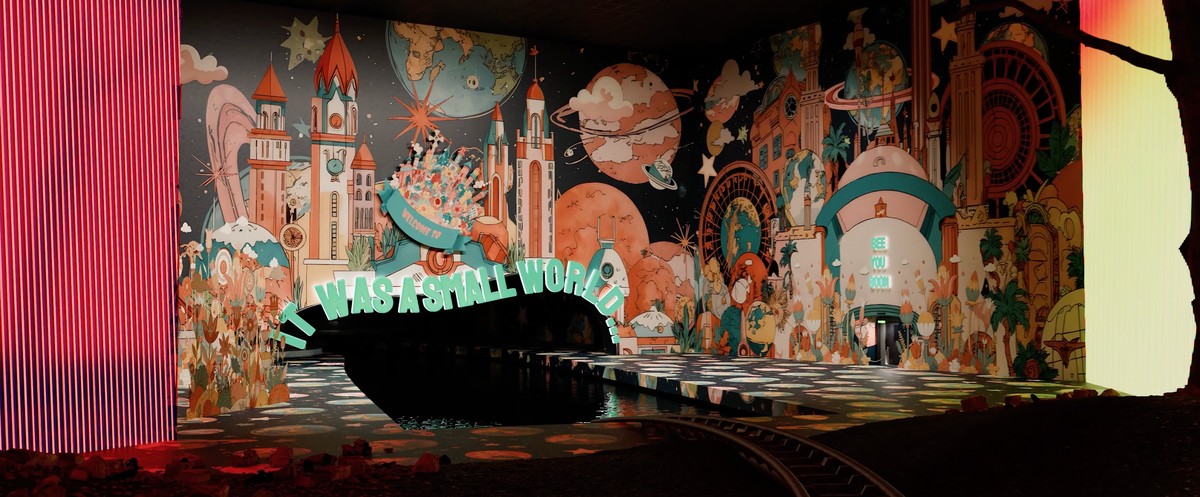
It so happens that this is precisely what Humankind has been working towards since the spread of intensive industrialisation, and it is pulling out all the stops: deforestation, intensive agriculture, industrial pollution, landtake – in other words, the gradual extermination of living matter, the meticulous eradication of the very conditions of its existence. It looks as if humankind harbours the desire to break this cycle, the immense power of which nevertheless rests on a precarious balance. We are contributing to breaking this cycle, particularly in the West, through our habits, our consumption patterns, and our insatiable need for “comfort.” And rather than addressing what is here and now, we support, in one way or another, plans to colonise other planets. We yearn to live in sterile spacecraft, artificially replicating the conditions of life, where we will eat food that has been artificially produced and enriched by science.
Eumull Moder Mor is imbued with this sense of ecological unease and offers an extrapolated reflection of the troubled times we are living through. The work uses the process of soil degradation as a metaphor for a wider collapse, and brings to light what we find difficult to face. Taking up the form of the altarpiece – a historical medium for Christian eschatology – I substitute it with another end of the world: no longer transcendent, but immanent and manmade.
That aside, the altarpiece does seek to bring to light forms of discreet resistance – figures who choose to inhabit subterranean, interstitial spaces where the possibility of a partial escape from the logic of over-consumption and control plays out. It is in this sense, moreover, that the project follows in the footsteps of my film La Colère de Dario. This is a 26-minute short that blends computer-generated imagery with live-action footage. It was made during my first year at Le Fresnoy under the watchful eye of Bertrand Mandico. The film was shot in the Loue Valley, home to a dying river ravaged by pollution from the Comté cheese industry.
The film is set in a near future dominated by artificial intelligence. Dario, a delivery driver, is plagued by visions – mental divagations that gradually shatter his reality. When he decides to deviate from the route imposed on him by his smart vehicle, he ventures off the marked roads, towards increasingly personal landscapes. The film already depicted a movement of self-imposed withdrawal towards a place of resistance, a gradual shift of the character from the techno-cocoon in which he is trapped towards an emancipatory world.
Eumull Moder Mor is a transmedia work combining writing, 3D still images, 3D animation, 3D-printed sculptures, music and performance.
The main structure, made of raw steel, consists of five large static 3D-printed panels and five 3D-printed sculptures.
The predella of the altarpiece contains a short story in book form, a fifteen-minute musical piece to be listened to through headphones, and a seven-minute 3D film.
A performative element is planned for the exhibition’s opening, in the form of a ceremony to unveil the altarpiece, accompanied by the piece of music. For the first hour, the altarpiece is visible in its standby position—that is, closed; then, the ritual ceremony begins, during which a figure is tasked with unveiling the contents of the panels and placing the 3D-printed “idols” at the top of the structure.

Étienne Kawczak-Wirz is a 33-year-old French visual artist, filmmaker and composer. Over the last three years, his resolutely multidisciplinary practice has centred on 3D animation and music. In 2023, he started up the musical project *Zone Minor Modification*, with a hybrid sound drawing on both historical and contemporary influences, at the crossroads of organic and electronic elements. Alongside his personal practice, in 2019 he co-founded *Unexplored Fields*, a digital creation studio specialising in the production of 3D content for the fashion, music and performing arts sectors.
Production
Partner
Credits
› Original music : Étienne Kawczak-Wirz
› Réalisation : Étienne Kawczak-Wirz
› Animation 3d : Étienne Kawczak-Wirz
› Impression 3d : Étienne Kawczak-Wirz
› Performance : Étienne Kawczak-Wirz
› Construction : École Centrale Lille
› Contre collage : Pictolille
› Chargé·e de production : Katell Paillard
